Three Other Main Themes of The Exhibition:
‘ALL BEAUTIFUL IN WOE’
The Royal Academy and Enslavement, 1768–1840. In Short This Captures The British Penchant For Portraits Militarily Big’ing Themselves Up. We See Much of This Throughout The Exhibition. Much More Captivating Than These Egotistical Elites Are The Then ‘Fashionable’ Black Men or Boys That Accompanied Them In Their Portraits. Politically They Were In Effect The Original ‘Token’ Blacks And Symbolic of The ‘One In One’ Out Policy That Prevails To This Day. Whilst Millions of Africans Were Enslaved Abroad Being Seen To Have A Black Assistant Was Proof That The Brits Weren’t Racist After All. Nonetheless These Figures Were Always Mariginalised To Pictorially Reflect The Fact That The Respective Subjects ‘Knew Their Place’.
Indeed, Increasingly As The Horrors of Enslavement Became More Apparent, Especially After The Case of The Zong (1781) And The Increased Political Activity of The Abolitionists, Sympathetic Painters Brought Their Subjects Further Into The Forefornt of Paintings. And This Would Always Illicit Scathing or Supportive Commentary. This Is Perfectly Illustrated By The Seperate Paintings of Marcus And Also Dido Elizabeth Belle (Above) And Turner’s The Slave Ship (Below).
Infact Dido Was Blood Related To The Lord Chief Justice of England And Wales, The 1st Earl of Mansfield As A Result of His Great Nephew’s Relationship With An Enslaved Woman (Dido’s Mother). He Brought The Baby Home From The West Indies And Asked His Great Uncle To Raise Her. He Agreed And Made Her A Companion To His Great Niece, Who Was Already In His Care Due To The Premature Passing of Her Mother. Dido Was Therefore Educated Alongside His Great Niece. She Would Later Help Her Great Uncle With His Legal Work As An Amanuensis (Legal Transcriber And Translator) And Eventually Marry A Lawyer Associate of His.
Mansfield Advocated The Case Against The Zong Insurance Claim And Legally Established The Fact That The Enchained Slaves Thrown Overboard Were Humans Not Cargo. And Thus The Slavers’ Claim For Lost Cargo Failed. The Story of Belle Is Told In The Film ‘Belle’ Directed By Amma Assante @iamammaassante
British Whitesupremicist Critics Complained About Marcus Being So Central, Active And Close In The Painting. But There Is No Pleasing White Supremacists. They Also Complained That In Another Seperate Painting The Central Black Assistant Appeared Too Inactive And Far Back Instead of Rushing Forward To Assist His Senior – Despite White Companions Already Attending To Him (The Painting Depicted A Shark Accident At Sea – Also In The Exhibition Though Not Here). Marcus Is A Specialist Subject of Actor Paterson Joseph After He Developed An Interest In 18th Century Paintings Having Become Interested In Ignatius Sancho
‘REPAIRING THE SABLE VENUS’
(This Section Tells The Official Story of A Black Venus Created By The Late Chicago Artist Margaret Burroughs Who Artistically Fashioned A Black Venus In The Style of Bottecelli’s Goddess of Love. But It Reveals Its True Origins Which Are Heart-Breaking A Black Venus Created To Present A False Narrative of How Well The Enslaved People of Africa Travelled Across The Middle Passage. Like Gods And Goddesses. This False Image Immediately Brought To Mind How Such False Representation And Europeanisation of Africans For A Caucasian or European Audience Continues Today, Especially In The Music Industry, Film And TV.
‘FALLACIES OF HOPE’
(Named After A Poem By JMW Turner):
TheOrator.Press (Online And Also @theorator.press.on.insta) Has Written Extensively About The Namesake of Turner Prize – Joseph Mallard William Turner (JMW Turner) – Since Researching Him After Reviewing Winsome Pinnock’s Award-Winning Slavery And Legacy Play ‘Rockets & Blue Lights’ A Few Years Ago At The National Theatre, On London’s Southbank.
The Play Is Named After One of His 1840 Twin Paintings. The Sister Twin Painting Is Called ‘The Slave Ship’ (Throwing The Dead And The Dying Overboard – Typhoon Coming Soon). Both Feature In This Exhibition. Turner Is Famous For His Landscapes And Seascapes.
Maritime Voyages And Military Personnel Were of Course Central To The Slave Trade Which Demanded Slave Ships And Which Had To Be Crewed With Sailors And Captains. Turner Exhibited The Twin Paintings At The Annual Academy Exhibition of 1840, Later That Same Year. At That Time The Academy Was Based At Trafalgar Square And The First Meeting of The World Abolitionist Convention Was Being Held At Nearby Exeter Hall. Prince Albert Was Reportedly Guest of Honour (Despite The Royal Colonial Expansion).
Aristocratic Abolitionists And Plantation Owners Held Strong Opposing Views And Tended To Be Dedicated To Their Cause. Yet Turner Himself Was Torn. He Was Known To Be A Contrary Character.
The Zong Massacre Upon Which Turner’s Twin Painting Is Said To Be Based (Where Enslaved Africans, Men, Women And Children, Were Murdered By The Sub-Human Treatment of The Enslavers Including Throwing Them Overboard After Discarding Them As Damaged Goods For Insurance Claim Purposes. This Depravity Followed A Maritime Mistake Which Meant The Ship Was Short of Supplies. Turner Was Just Six Years Old At The Time And Unaware of It.
He Later Reportedly Invested In A Jamaican Sugar Plantation Tontine Circa 1805 (When He Was Thirty Years Old),
He Wrote A Sympathetic Poem Called ‘The Fallacies of Hope’ About The Horrific Practice of Drowning Slaves By Throwing Them Overboard In 1812 (When He Was 37).
He Read The Book ‘The History And Abolition of The Slave Trade’ By Thomas Clarkson In 1839 (When He Was 64).
And He Painted And Exhibited ‘Rockets And Blue Lights’ And ‘The Slave Ship’ In 1840 (When He Was 65). And Alongside It He Published His Previously Unfinished Poem of 1812 (Written 28 Years Earlier, When He Was Just 37). So, In Effect, It Took Him Virtually 30 Years To Paint The Slave Ship, Having Long Since Known of Its Atrocities For Decades. It Was Arguably His Crisis of Conscience.
[NB: Clarkson’s Book Also References Another Slave Ship Called The Rodeur. But It Was The Legal Court Case of The Zong That Caused This Ship To Become The One That The Public Associated With Sub-Human Slave Trade Practices, As The Case Was Widely Reported And Received A lot of Publicity. So Outraged Were Decent People At Large, Including The Bench, And The Abolitionists, That This Case Decreed That Africans Were Not Chattel – But Human Beings. It Helped Dismantle The Whole Prevailing System. In Britain The Slave Trade Was Abolished In 1807. Slavery Itself Was Only Abolished In 1833 (Over A Quarter Century Later). And Throughout The Western World There Remained Along Way To Go.]
[In America Abraham Lincoln Abolished It In 1865 Only After The North & South Civil War. Juneteenth, A National Holiday Advocated By Congress Woman Sheila Celebrates That Emancipation Declaration.]
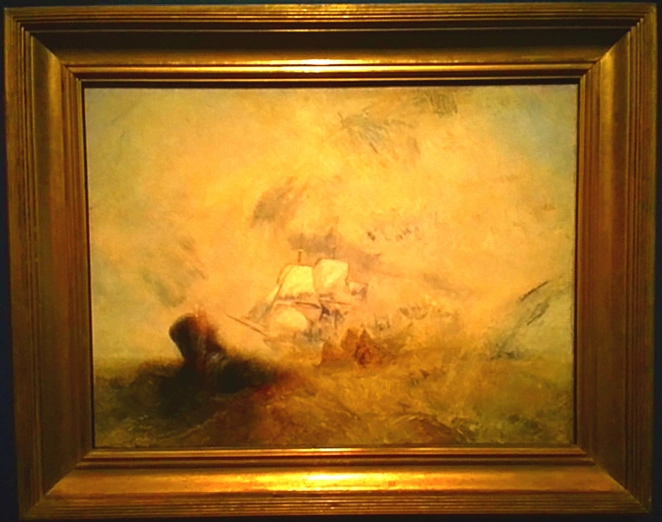
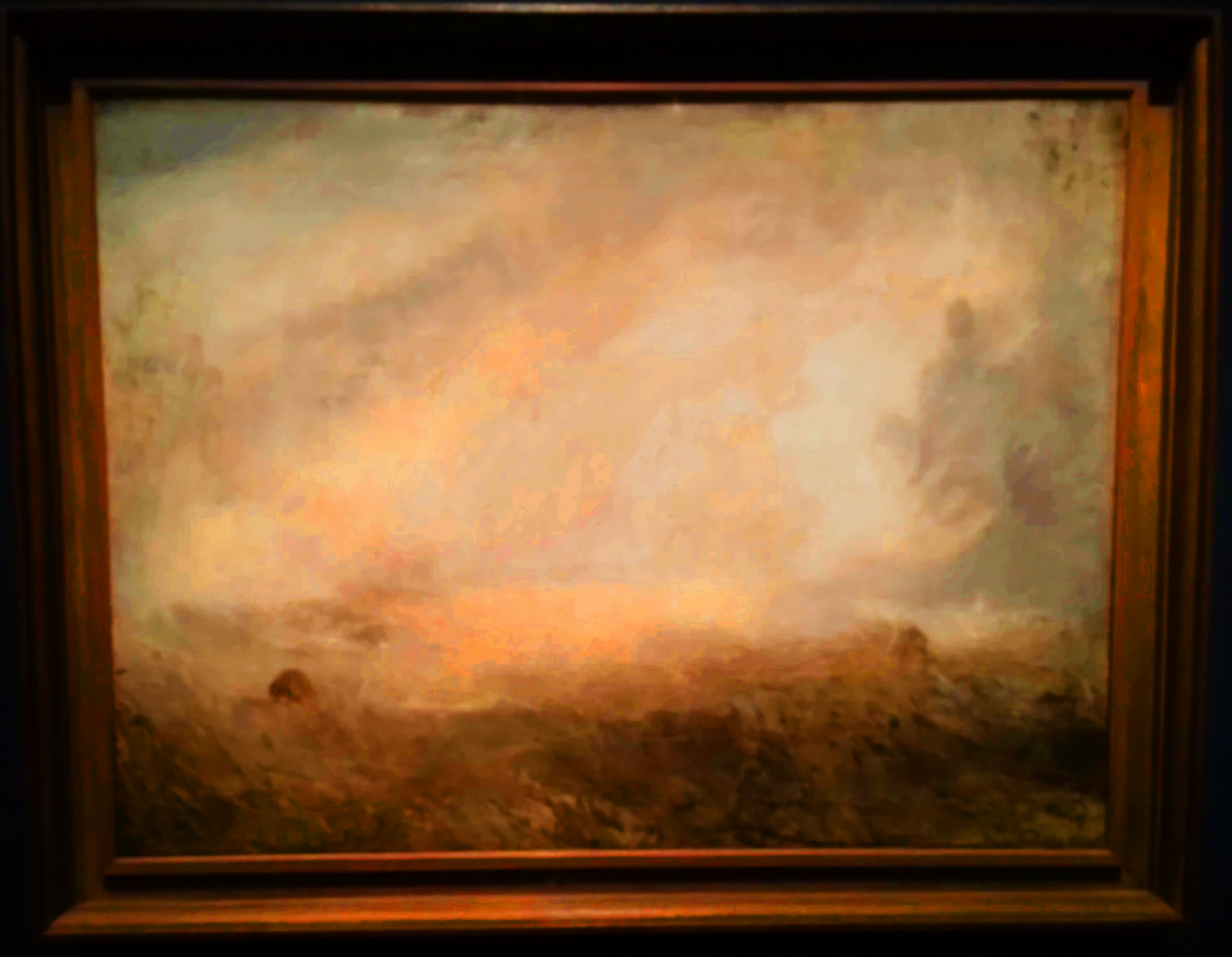
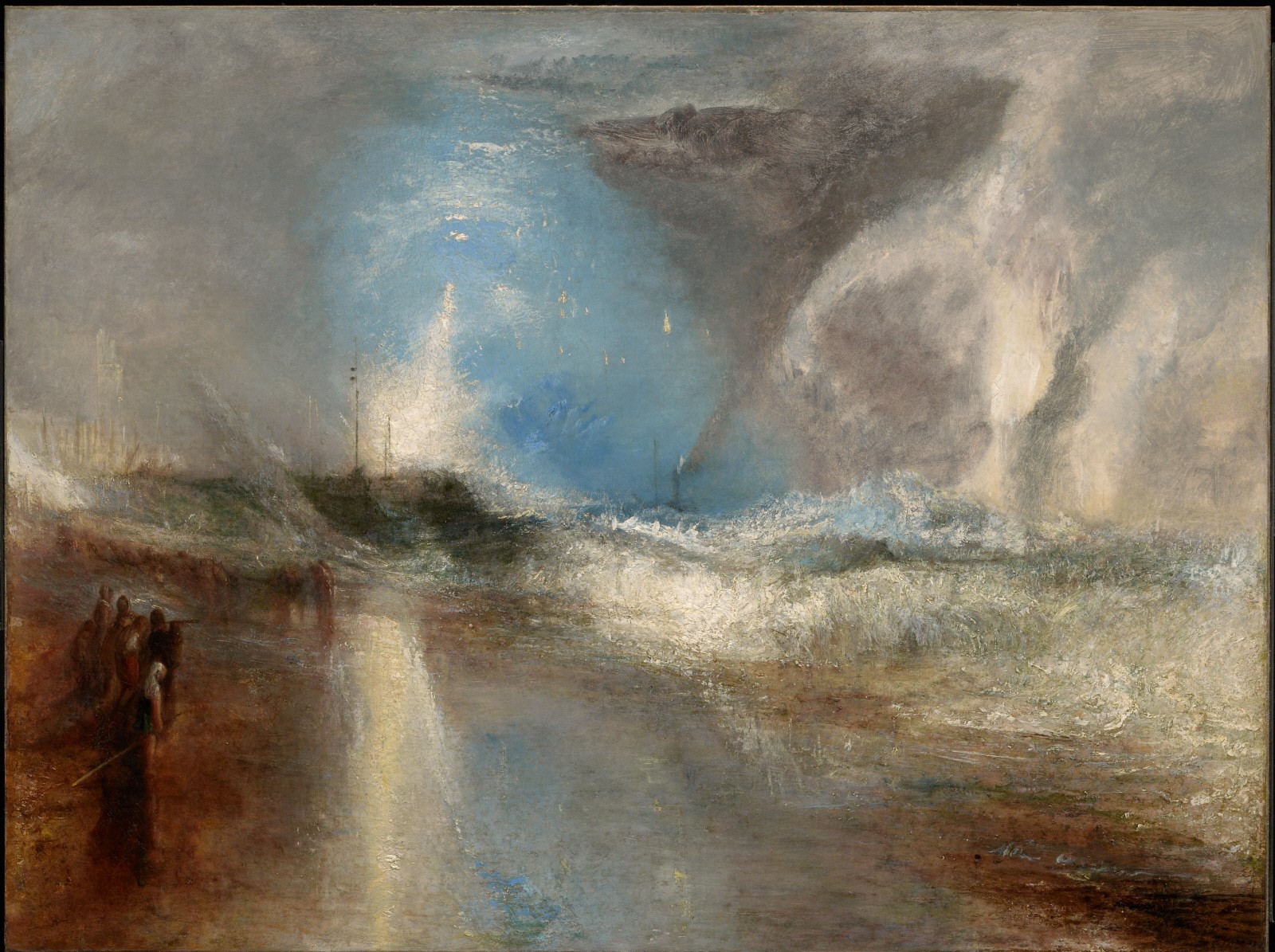
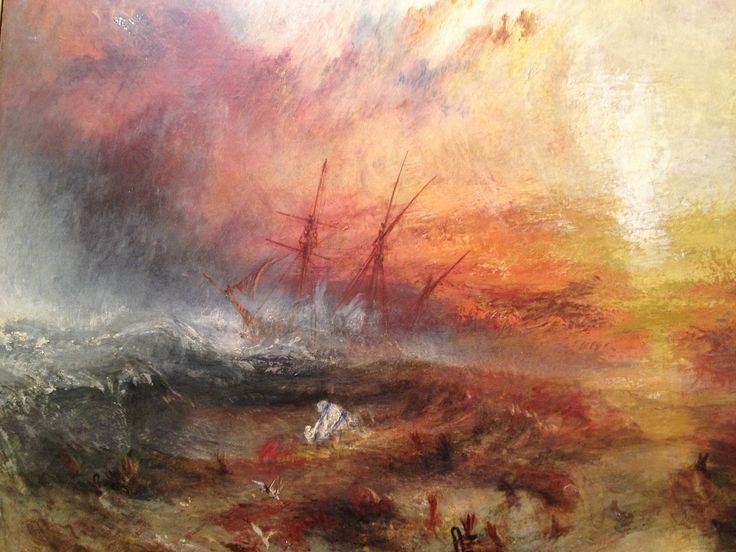
Bottom Painting: The Slave Ship By JMW Turner (1840). Many Are Drowing & Perishing Horrifically In This Painting. Enchained Slaves Would Be Thrown Overboard At Will If The Ships Ran Out of Supplies As They Were Treated As ‘Cargo’ Not Human Beings. The Famous Zong Case Helped Put An End To This And Establish African Slaves As Human Beings Not Chattels. Cleverly Turner Says Alot By Showing As Little As Possible. It Was His Anti-Slavery Statement of The Time. This Was His (Non-Identical) Twin Painting To Rockets & Blue Lights of The Same Year (1840). Bottom Right: Rockets & Blue Lights By JMW Turner (1840) Noisy Light Flares (Rockets & Blue Lights) Would Be Sparked & Sounded When British Royal Navy Ships Approached As They Monitored The Seas To De-Commission Any Illegal Slave Ships Still Trading After The Abolition of The Slave Trade (1807) And Slavery (1833). Locals Would Also Release Rockets And Blue Lights To Warn Vessels of Approaching Shallow Waters Near To The Shores. Top Left: The Whalers By JMW Turner (1845) Britain Was Once Deeply Involved In The Whale Trade As Captured By Turner In This 1845 Painting Which Was Exhibited At The Annual RAA Show That Year. One Can Clearly See A Whale. It Was Part of A Pair And A Series of Four In Total. Top Right: One of A Series of Four Whaling Paintings By JMW Turner. It’s Called Seascape With A Buoy. He Offered One To Elharian Bicknell A Whaler At The Time And He Rejected It. Perhaps Ashamed of His Whaling Activity (Although It Was Also Suggested That It Was Because He Did Not Like Its Finish).
‘Fallacies of Hope‘
(A Poem By JMW Turner)
Aloft All Hands, Strike The Top-Masts And Belay;
Yon Angry Setting Sun And Fierce-Edged Clouds Declare The Typhoon’s Coming.
Before It Sweeps Your Decks, Throw Overboard The Dead And Dying –
Ne’er Heed Their Chains
Hope, Hope, Fallacious Hope!
Where Is Thy Market Now?
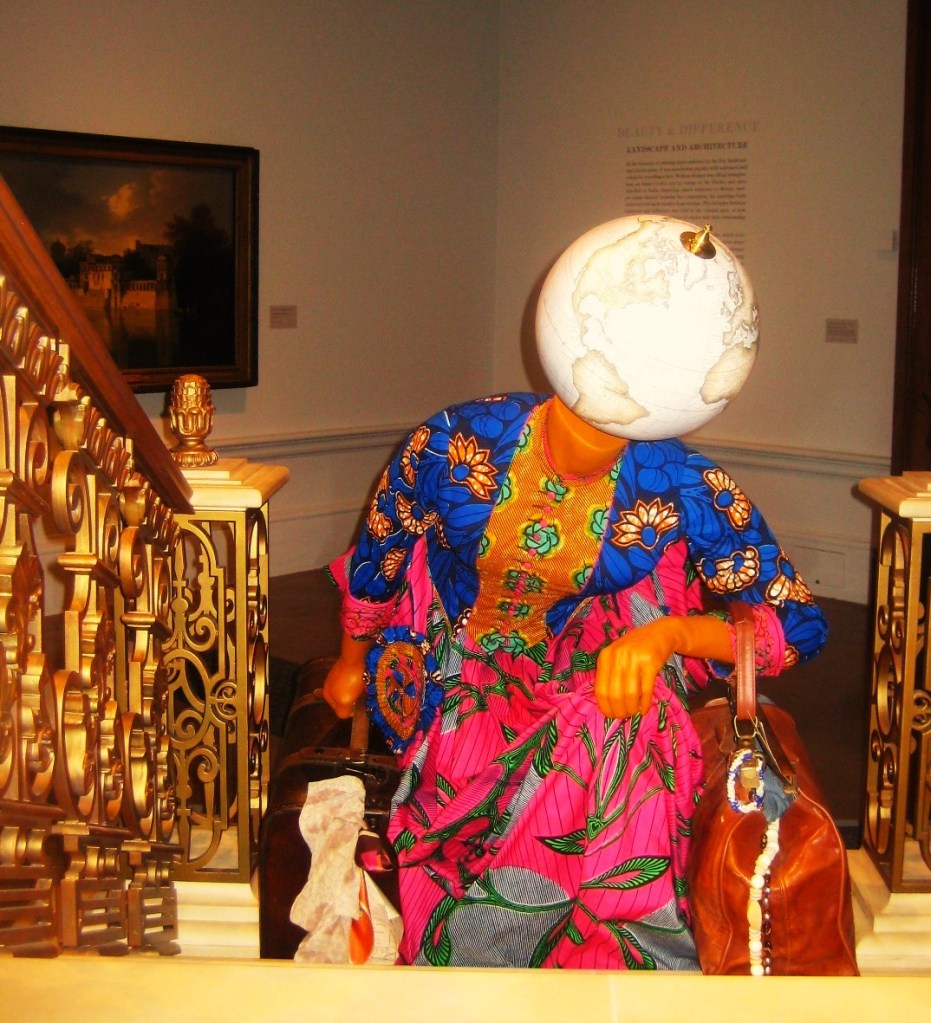
Installations By Artists Lubaina Hamid And Yinka Shonibare
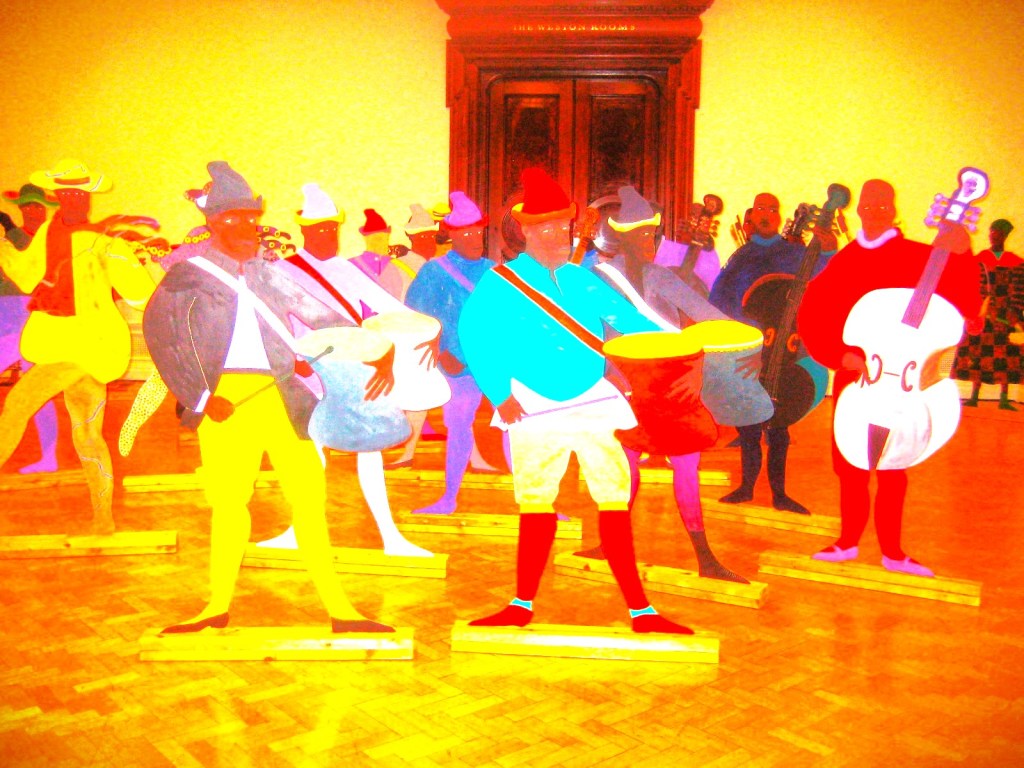
Above: Lubiana Hamid’s Installation ‘Naming The Money’ @royalacademyart
Left: Yinka Shonibare CBE Installation ‘Woman Moving Up‘ @yinkashonibarestudio
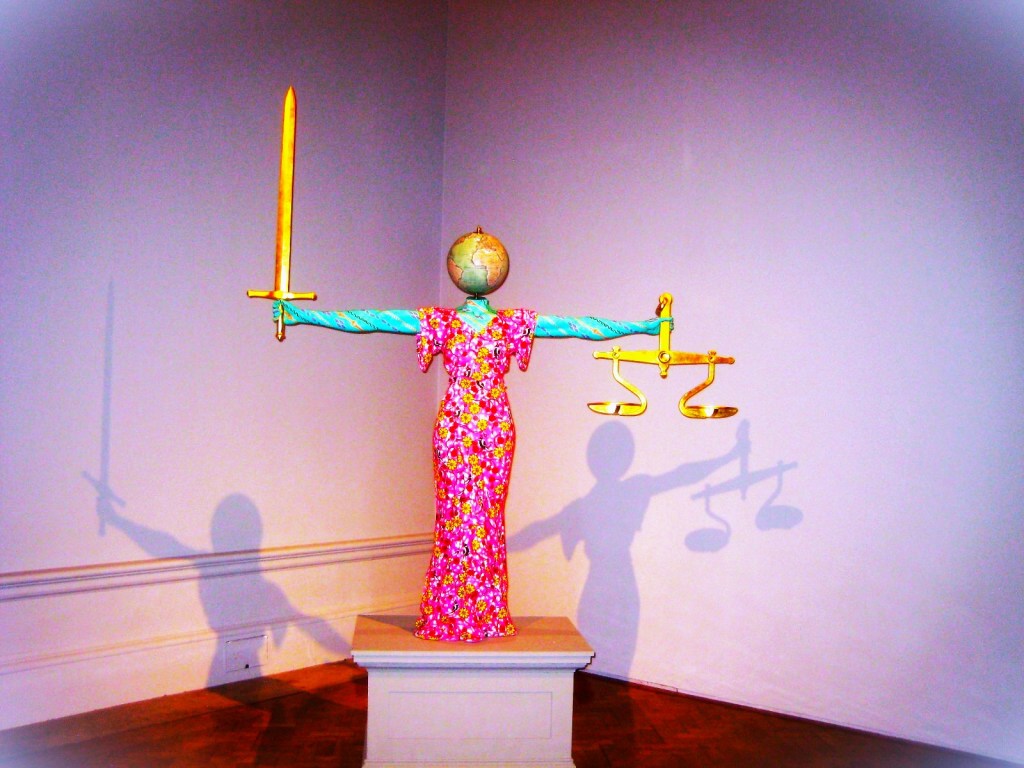
Right: Yinka Shonibare CBE Installation ‘Justice For All’ @yinkashonibarestudio
Exhibition Continues Until Sun April 28 2024: @royalacademyarts
Other Exhibition Artworks Expressing Britain’s Colonial Past On The High Seas And The Lives of Those Who Survived The Horrors of It Include: Lubaina Humid With Her Salute To ‘The Resilence’ of Africans And Those Enslaved By British And European Colonialists. It Is A Wonderfully Colourful Installation of Various Life-Sized Individuals Made To Work For Free, Which She’s Called ‘Naming The Money’. On The Back of Each Figure Is The Name of Each Person, The Work They Did And The Amount of Money They Were Paid For Their Labour. These Include Musicians. Ceremasists And Potters. The Figure Earnt By These Workers Is of Course Already Known To Us All. Zero!
This Exhibition Contains So Much More Than We Could Ever Lay Out Here And Is So Exceptional That We Will Return To It Again No Doubt On Several Occassions Over The Coming Months And Years. It Is Simply Outstanding And Undoubtedly Inspire Years of Debate, Reflection And Study.
Refreshingly The Work Of Diverse Innovative Artists Is Displayed Alongside The Work of Old School Established Artists of A Different Age. And This Is Happening In The Heart of Mayfair A Bastian of Royalty And Regal History.
The Aforementioned Accompanying Book With The Same Name As The Exhibition Is An Excellent Mobile Version of This Momentous Artwork With All The Paintings And Art Pieces Included, Brightly Pictured And Documented. It Contains So Much Rich Content Perfect For A Black-British History or Sociology Curriculum.
Located In Piccadilly And Part of The Mayfair And Burlington Arcade Neighbourhood Art Scene We Salute The RAA For Its Courageous, Conscientious, And Comprehensive Curation of This Important, Historical, Beautiful, And Educational Exhibition.
The Royal Academy of Art ‘Entangled Pasts’ Exhibition: Monday February 3rd – April 28 2024.
 TheOrator.Press ~ A New, Monthly, Online, Independent Magazine